
The Timeless Journey of Incense: From Ancient Rituals to Modern Well-being
Incense, the aromatic biotic material that releases fragrant smoke when burned, has woven its way through human history for millennia. Its story spans continents and cultures, evolving from sacred religious offerings to a tool for modern wellness. The following timeline highlights some key moments in this long history:
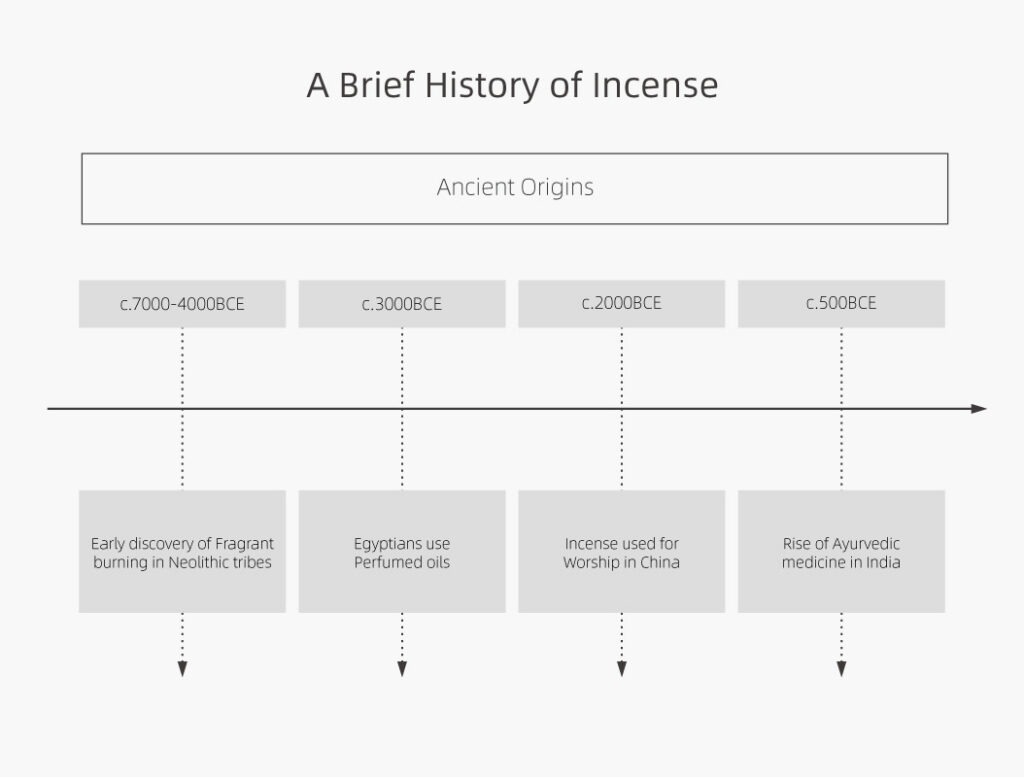
Ancient Ignition: The Early History of Incense
The use of incense is deeply rooted in ancient civilizations, where it was integral to ritual, medicine, and daily life.
· Early Discoveries · The earliest use of incense likely dates back to Neolithic times. Around 7000-4000 BCE, tribes discovered that burning certain fragrant woods like cypress and cedar released pleasant smells, and they also found that heated animal fats could absorb and release plant aromas, hinting at early therapeutic uses.
· Egyptian Mastery · By 3000 BCE, Egyptians were skilled in using perfumed oils and ointments. Famous figures like Cleopatra used them, and they also incorporated cedar and myrrh into the mummification process, leveraging their preservative qualities.
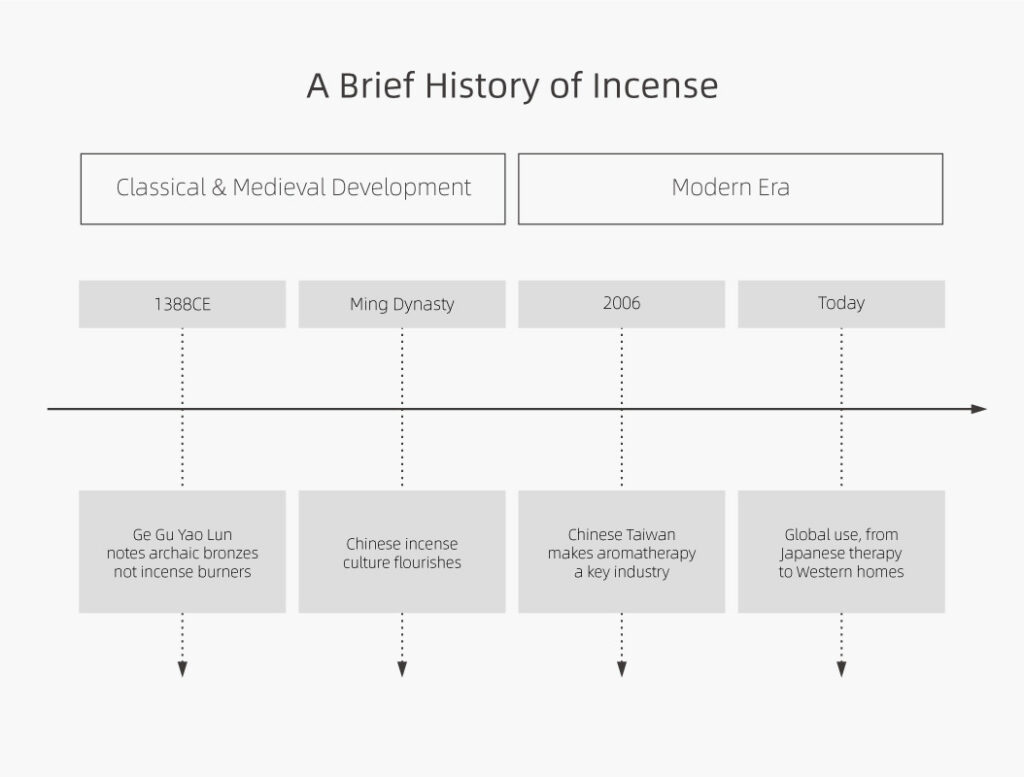
· Chinese Beginnings · In China, incense use for religious worship began around 2000 BCE and became widespread during the Xia, Shang, and Zhou dynasties . Early Chinese incense was a blend of herbs and plant products like cassia, cinnamon, and sandalwood . Initially, it was used in rituals and for purifying the air and repelling pests. Scholars note, however, that contrary to later practices, archaic bronze vessels from the Shang & Zhou periods were likely not used as incense burners.
A Tapestry of Traditions: Incense Across Asia
Incense culture developed unique characteristics across various Asian regions, deeply influencing spiritual and daily practices.
· China · The Chinese tradition of burning mugwort and calamus to ward off epidemics dates back to ancient times. Famous physician Hua Tuo created small sachets filled with musk and clove to treat diseases like tuberculosis. The use of incense expanded from ceremonial and medicinal purposes to become a marker of refinement and elegance among the elite, with smoke from bronze censers symbolizing a tranquil and noble atmosphere.
· India · In India, incense is deeply intertwined with Ayurveda, one of the world’s oldest medical systems. Ayurvedic medicine historically used aromatic plants for both religious and therapeutic purposes, with sandalwood, clove, and benzoin being among the three major medicinal materials. These scents were believed to purify the environment and promote physical and spiritual well-being.
· Japan · Japan has developed its own distinct aromatic culture. It researched and developed unique plant essences such as Japanese cypress. Furthermore, Japanese researchers have pioneered studies on the effects of aromatherapy, for example, its impact on dementia and memory loss, integrating modern science with traditional practices.
The Modern Incense Experience: From Spirituality to Wellness
Today, the use of incense has evolved, blending tradition with contemporary needs for creating atmosphere and promoting well-being.
· Spiritual and Meditative Use · Incense remains a vital part of religious and spiritual rituals worldwide. In some traditions, the number of sticks burned holds symbolic meaning, often an odd number such as one, three, five, or seven. For meditation or creating a specific mood, a smaller amount is often recommended to avoid an overwhelming scent .
· Aromatherapy and Health · The therapeutic use of fragrance, known as aromatherapy, has seen a major resurgence. In 2006, for instance, Taiwan designated aromatherapy as a key development industry, leading to its widespread application in beauty, spa treatments, and even patient care. Scents are used to aid relaxation, alleviate stress, and balance emotions. Modern research also explores the antibacterial properties of certain incense smokes .
· Safety and Mindfulness · With greater awareness of indoor air quality, safe burning practices are emphasized. It’s advised to burn incense sparingly in well-ventilated areas. While burning incense daily can create a calming atmosphere, ensuring proper ventilation is key to minimizing potential health risks from smoke inhalation.
The Enduring Fragrance
From the ancient bronze censers of Chinese nobles to the calming scent in a modern yoga studio, incense has journeyed through time and across the globe. Its role has expanded from purely spiritual and medicinal applications to encompass personal well-being and ambient fragrance. As we continue to burn these aromatic sticks, we participate in an age-old ritual, connecting with a rich, fragrant history that continues to evolve and adapt to our modern lives.